
Tech Chain Crafter

🏁 The athlete’s dilemma of industry
In sports, training too little leaves you unprepared.
Training too much, too early, burns your energy and wastes your effort.
Factories face the same question every day:
“Should we produce based on forecasts — or wait for real customer orders?”
Finding the right rhythm between preparation and action is what separates chaos from flow.

In supply chain terms, it’s the balance between forecasted demand and confirmed sales orders.
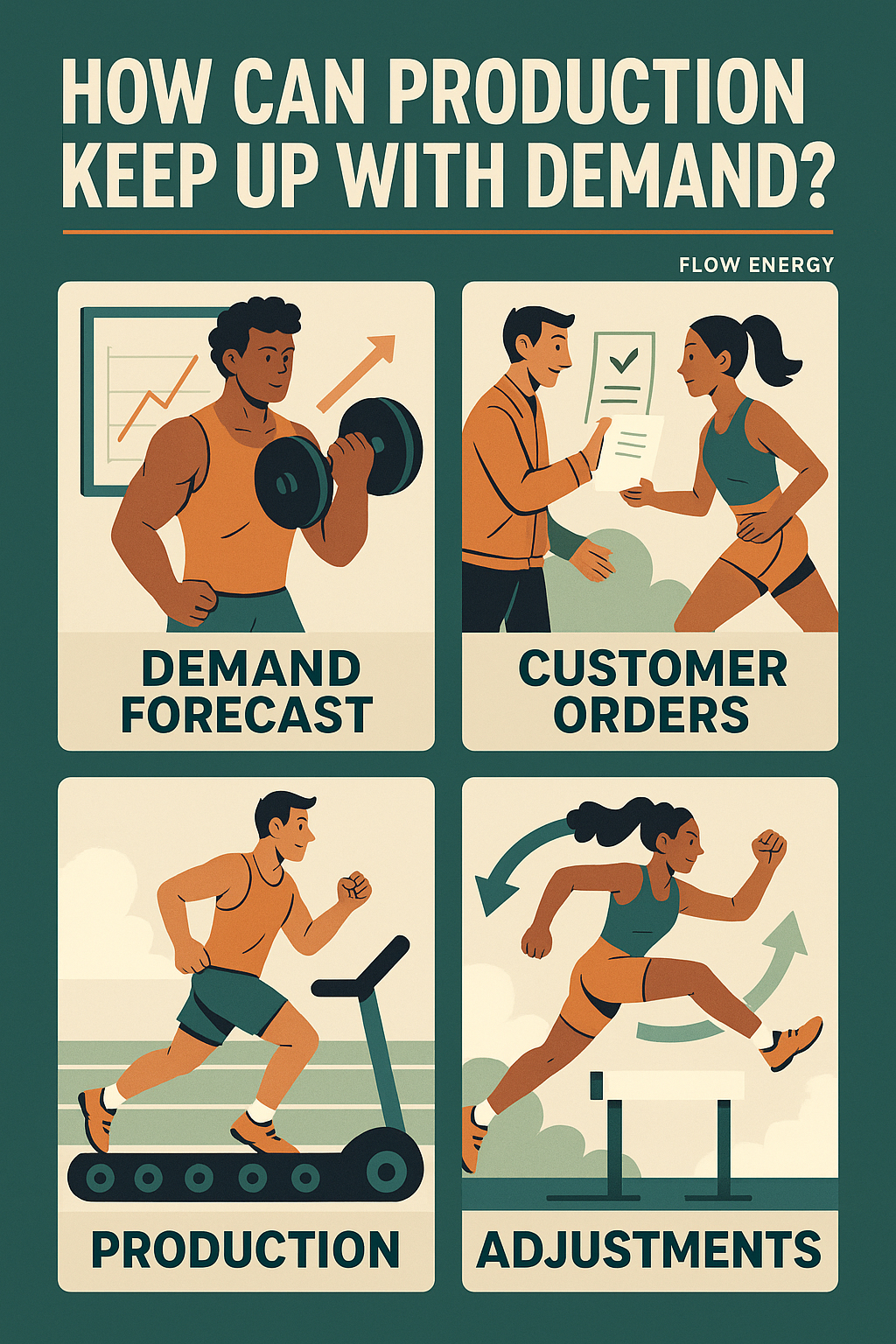
🧩 1. Two types of demand — training vs competition
In the world of manufacturing, demand comes in two forms:
| Type | Analogy | Description | Certainty |
|---|---|---|---|
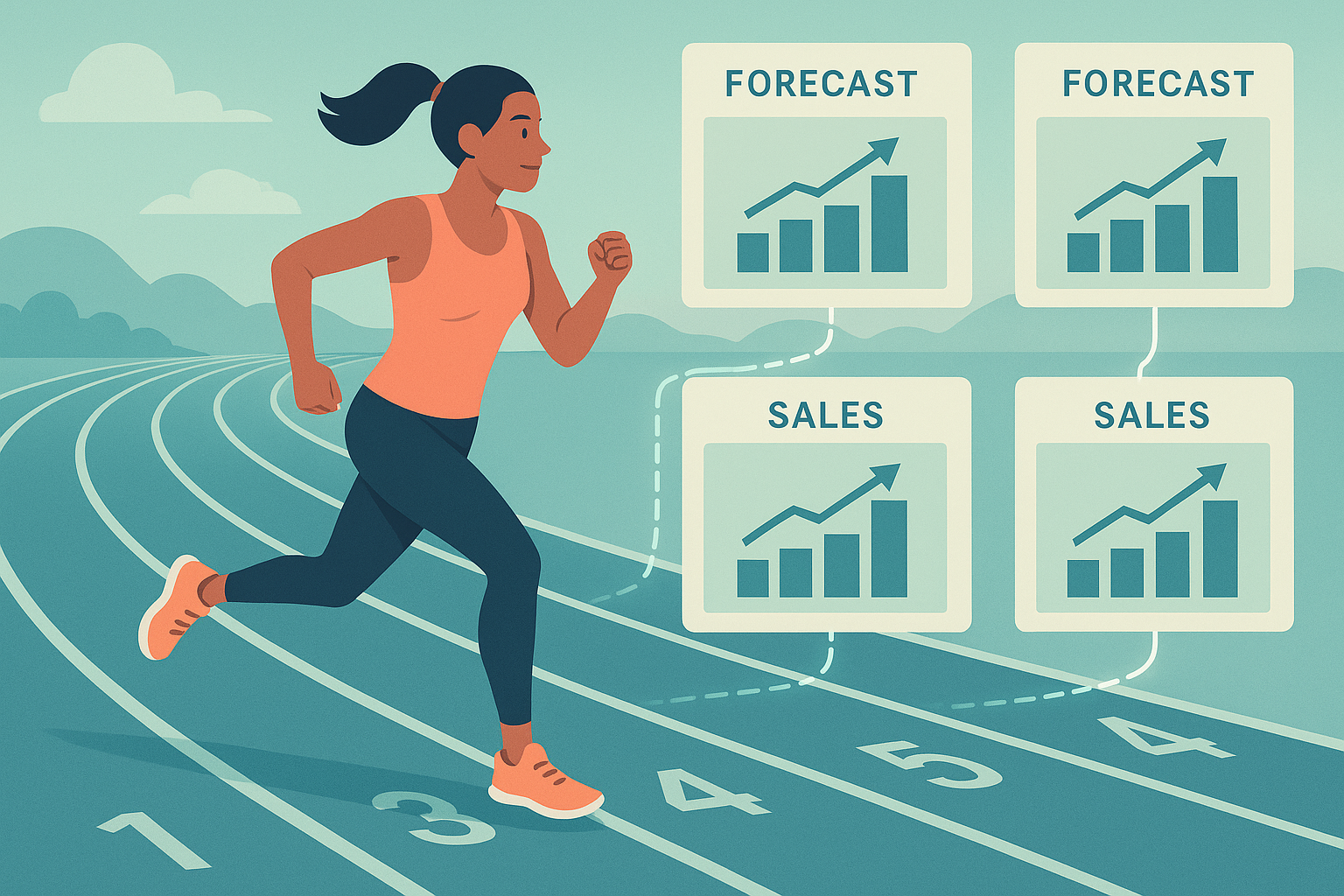
| Forecast | 🏋️ Training plan | Planned effort to stay ready and in shape | Medium |
| Sales Order | 🏆 Competition day | Real event, real results, no guessing | High |
- Forecasts keep your muscles ready — they build endurance.
- Sales orders test your performance — they bring results.
A factory that only “trains” (produces on forecast) might waste energy.
A factory that only “reacts” (produces on order) might be too slow.
Just like an athlete, balance is everything..
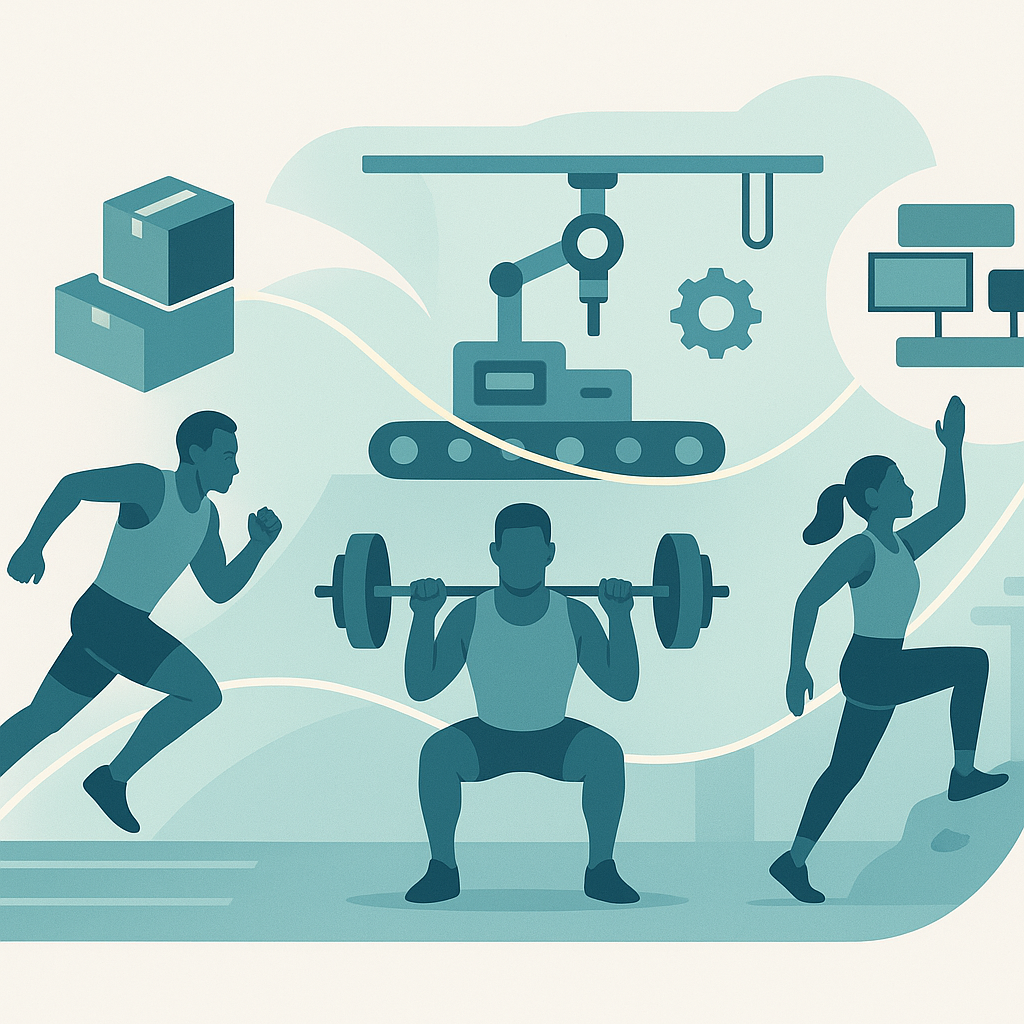
🏗️ 2. Three production models — three disciplines
Each factory, like each athlete, has its own game plan.
| Model | Analogy | Planning base | Typical examples |
|---|---|---|---|
| Make to Stock (MTS) | 🏃 Sprinter: ready before the race | Forecast | Fast-moving goods, standard parts |
| Assemble to Order (ATO) | 🏋️♂️ Cross-trainer: prepares base strength, adapts to each match | Forecast + Sales Orders | Cars, configurable machines |
| Make to Order (MTO) | 🧗 Climber: starts only when the route is known | Sales Orders | Custom machines, projects |
Each discipline demands a different mindset.
MTS anticipates. MTO reacts. ATO masters both.
In reality, most companies are hybrid athletes — needing stamina and adaptability.
⚙️ 3. The Master Production Schedule — your internal coach
The MPS (Master Production Schedule) is like a coach guiding your training.
It turns your goals (forecasts + orders) into a realistic, sustainable performance plan.
Let’s say your forecast predicts 1000 units this month.
You’ve already received 600 confirmed orders.
→ The MPS keeps the total at 1000 but consumes 600 from the forecast.
→ The next 400 remain as anticipation for new clients.
That’s forecast consumption — the moment training effort turns into real competition performance.
It’s how your system avoids both overtraining (overproduction) and burnout (shortage).
🧘 4. From chaos to flow — rhythm is everything
In elite training, you don’t push 100% every day.
You follow a rhythm: load, rest, adjust, repeat.
Industrial flow follows the same logic.
- Forecast = base load
- Orders = intensity
- MPS = feedback loop
When these three pulse together, the factory breathes.
Materials, data, people, and machines move in sync — not rushed, not idle.
That’s operational flow: when clarity replaces stress, and precision replaces panic.
💡 5. Lessons from the field
Think like a planner, move like an athlete.
- Don’t obsess over a perfect forecast — build a resilient system.
- Don’t wait passively for orders — stay “fit” for change.
- Don’t isolate planning, production, and sales — let them share the same rhythm.
The goal is not prediction.
It’s prepared responsiveness.

🌿 6. Flow is the new performance
At Tech Chain Crafter, we believe:
“A factory in flow performs like a body in balance.”
When forecasts, orders, and capacity move together,
you don’t just produce — you perform.
Every cycle becomes an act of alignment between promise and delivery.
That’s how modern manufacturing achieves both calm and control —
by training for clarity, not perfection.
🎯 Takeaway
- Forecasts = training
- Orders = competition
- MPS = coaching
- Flow and adjustments = mastery
And mastery, in the industrial world, is what makes performance sustainable.